Thread as Thunder: Meet the Fiber Artists Using Loom and Yarn to Fight Back
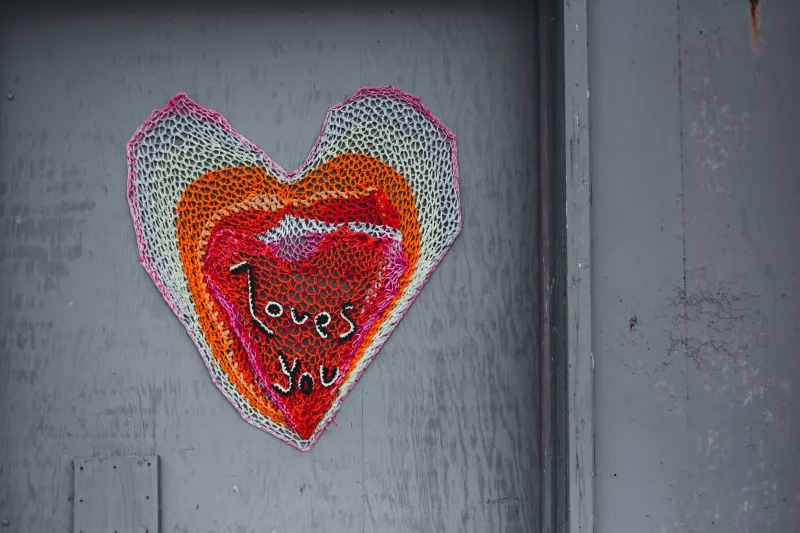
There's a telephone pole on the corner of Milwaukee Avenue and Armitage in Chicago that's been wrapped in a riot of magenta and gold yarn for going on three years. Most people walk past it without a second glance. But if you stop long enough to read the tiny hand-stitched text looping around the base — this land remembers — something shifts. You start to wonder who put it there. And why.
That pole is the work of a loose collective called Tangled Roots, one of dozens of underground fiber art crews operating across the US right now, turning what your grandmother might have called "women's work" into something that feels a lot more like a manifesto.
Craft Was Never Just Craft
The idea that textile work is somehow softer or less serious than painting or sculpture is a bias with a long, boring history. For centuries, fiber arts — weaving, embroidery, knitting, quilting — were systematically excluded from fine art institutions precisely because they were associated with domestic labor and, by extension, with women and marginalized communities. The art world called it "craft." What it really meant was not for us.
The current underground textile movement is acutely aware of that history, and it's using it as fuel.
"We're not trying to get into a gallery," says Drea Vásquez, a weaver based in Albuquerque who incorporates pre-colonial Pueblo pattern work into large-scale wall pieces that have appeared on the sides of buildings, inside community centers, and strung across chain-link fences in her neighborhood. "The gallery system was built to exclude people who look like me. So why would I spend my energy begging for a seat at that table?"
Vásquez is part of a growing cohort of Indigenous and Latine fiber artists who see the loom not just as a tool but as an act of cultural reclamation. The patterns she weaves aren't decorative choices — they're living archives. Geometric motifs that survived colonization, encoded in fiber because cloth was harder to burn than books.
Yarn Bombing Gets Serious
If you've only encountered yarn bombing as the mildly whimsical practice of knitting colorful sleeves onto tree trunks, prepare to recalibrate. The form has grown up considerably, and its practitioners are increasingly using public textile intervention to make pointed, sometimes confrontational statements about housing, policing, reproductive rights, and environmental destruction.
In Los Angeles, a group called Loose Ends has been installing large woven banners in the downtown Arts District that critique the displacement of longtime residents by luxury development. The pieces look beautiful from a distance — all saturated color and intricate texture — but up close, the imagery shifts. Figures being pushed out of doorways. Price tags stitched into domestic scenes. It's the visual equivalent of a sucker punch wrapped in a warm hug.
"Fiber invites people in," says one member of the collective who asked to be identified only as Sable. "People stop and touch it. They engage with it in a way they don't with a painted sign or a stencil. And once they're close enough to really look, they're already inside the work."
That intimacy is a deliberate strategy. Textiles carry an embodied warmth that other mediums struggle to replicate, and underground artists are leveraging that tactile pull to draw viewers into conversations they might otherwise scroll past.
Queering the Loom
In Brooklyn, a studio collective called Warp & Weft Queer Arts has been running monthly open weaving sessions out of a rented space in Bushwick for the past two years. The gatherings are part workshop, part community meeting, part safe haven. Participants range from experienced weavers to complete beginners, united less by skill level than by a shared sense that the act of making together is itself a form of resistance.
"There's something about the repetitive motion of weaving that creates space for real conversation," says collective co-founder Ines Park. "You're doing this meditative physical thing, and your guard comes down. People talk about things they wouldn't bring up anywhere else."
The work that emerges from these sessions often incorporates queer iconography, trans flags, and patterns drawn from global textile traditions that predate the gender binaries imposed by Western colonialism. Several members have been researching pre-contact textile practices from their own cultural backgrounds, finding in historical cloth a vocabulary for contemporary identity that feels both ancient and urgently new.
The Algorithm Problem
Here's where things get complicated. Social media — Instagram in particular — has been genuinely transformative for underground fiber artists. Makers who would have previously been limited to local audiences can now build followings of tens of thousands, connect with other artists across the country, and generate enough income from prints, workshops, and commissions to keep doing the work.
But the same platforms that amplify these voices also tend to sand down their edges. The algorithm rewards aesthetics over politics. A beautifully photographed weaving will perform; a weaving with a paragraph of context about land rights will not. Artists who start out making confrontational work find themselves gradually — almost unconsciously — adjusting their output toward what gets engagement.
"I caught myself making something prettier because I wanted the shares," admits Vásquez. "And then I stopped and asked myself who I was making it for. That was a hard moment."
The commodification pressure is real too. Etsy shops, licensing deals, and collaborations with mainstream brands come knocking once an artist builds a following, and the financial temptation can be significant for people who have never had much financial stability. Some artists navigate this by maintaining a strict separation between their commercial work and their political practice. Others find the line impossible to hold.
Stitching the Cracks
What's striking about the underground textile scene, across all its regional variations and political flavors, is how insistently communal it is. Unlike a lot of art movements that orbit charismatic individual figures, this one seems to genuinely run on collective energy. Knowledge is shared freely. Techniques are taught, not hoarded. The model feels almost deliberately anti-capitalist in its structure — a rebuke not just to mainstream aesthetics but to the entire framework of the art world as a competitive marketplace for individual genius.
That communal ethos might also be what ultimately protects the movement from being absorbed and neutralized. When there's no single star to co-opt, no clean brand narrative to package and sell, the thing becomes harder to flatten into a trend.
Back on that Chicago corner, the yarn on the telephone pole has started to fray at the edges. Someone has added a new section since the original installation — a band of deep blue with tiny white figures that weren't there before. Nobody knows exactly who added it. That anonymity, that ongoing, uncreditable accumulation of voices, might be the most radical thing about it.
The thread keeps going. And it's not asking permission.