Staples, Ink, and Attitude: Why Zine Culture Is the Most Exciting Art Movement You're Sleeping On
Staples, Ink, and Attitude: Why Zine Culture Is the Most Exciting Art Movement You're Sleeping On
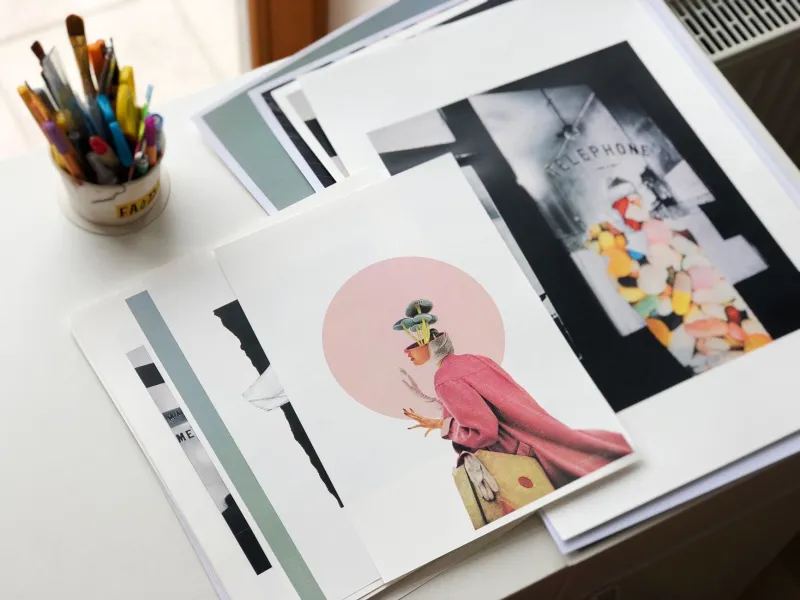
There's a particular smell to a freshly printed zine — something between warm toner and possibility. Walk into a zine fair in Brooklyn on a Saturday afternoon and you'll catch it immediately, drifting up from folding tables stacked with hand-cut pamphlets, misregistered risograph prints, and staple-bound booklets that look like they were assembled in someone's kitchen at 2am. Because honestly? A lot of them were.
And that's exactly the point.
Across the United States, a quietly radical movement is picking up serious momentum. Independent zine culture — long dismissed as a relic of 90s punk basements and Xerox machines — is experiencing a full-blown renaissance, and the people driving it are younger, weirder, and more intentional than ever before. Gen Z creators, in particular, are turning their backs on the dopamine slot machine of social media metrics and choosing instead to make something real. Something you can hold. Something that doesn't disappear in 24 hours.
The Algorithm Isn't the Vibe Anymore
Let's be honest about what Instagram did to visual art. It compressed everything into a 1:1 square, optimized it for engagement, and quietly trained a generation of creators to make work that performs rather than work that means something. Likes became the currency of validation, and the pressure to maintain a consistent aesthetic — a "brand" — started to feel less like creative freedom and more like a part-time job you never applied for.
Zines are the antidote to all of that. They exist completely outside the attention economy. There's no algorithm deciding who sees your work, no comment section to manage, no shadowban to fear. You make it, you print it, you hand it to someone or sell it at a fair, and then it lives in their apartment, on their nightstand, dog-eared and real.
"I got so burnt out trying to make content," says Maya Osei, a 24-year-old illustrator and zine maker based in East Atlanta. "One day I just printed 50 copies of a zine about my grandmother's recipes and sold them at a local market. People cried. Nobody ever cried at my Instagram posts."
That emotional directness — the unmediated connection between creator and reader — is something zines have always offered. But right now, in the context of digital fatigue and algorithmic noise, it hits differently.
From Brooklyn Basements to Austin Art Fairs
The geography of the zine revival is sprawling and wonderfully decentralized. In Bushwick, Brooklyn, community print shops like Interference Archive and various risograph collectives have become gathering spots where emerging artists can rent time on machines that produce that dreamy, slightly imperfect color separation that's become synonymous with contemporary zine aesthetics. In Austin, the annual Austin Zine Fest draws hundreds of makers from across Texas and beyond, filling warehouse spaces with everything from queer poetry chapbooks to experimental typography showcases to hand-sewn artist books that blur the line between zine and sculpture.
Chicago's zine scene clusters around independent bookstores and art spaces in neighborhoods like Pilsen and Logan Square, where zine swaps double as community organizing events. In Los Angeles, the LA Art Book Fair at the Geffen Contemporary has grown into one of the most anticipated events in the alternative publishing calendar, attracting international artists and turning zine-browsing into a full cultural experience.
What's striking about all of these spaces is the diversity of voices showing up. This isn't the predominantly white punk scene of zine culture's first wave. Today's zine makers include Black artists documenting their communities, Latinx creators reclaiming narrative space, disabled artists whose work would never survive the sanitizing filter of mainstream publication, and trans and nonbinary voices building archives of experience that feel urgent and necessary.
The Makers Pushing the Form Forward
A few names keep surfacing in conversations about where zine culture is heading.
Tomás Reyes out of Albuquerque has been making politically charged zines about Southwest border culture for three years, using a combination of found photography, hand-lettering, and screen printing to create pieces that feel like protest posters and personal diary entries at the same time. His print runs rarely exceed 100 copies, but they circulate widely through mutual aid networks and community centers.
Jade Whitmore, based in Philadelphia, publishes a quarterly zine called Soft Architecture that examines interior design through a queer feminist lens. It reads part design criticism, part personal essay, part love letter to spaces that hold us. Each issue is formatted differently — sometimes accordion-fold, sometimes saddle-stitched — because, as Whitmore puts it, "the form should be part of the argument."
Then there's the Brooklyn-based collective Melt Press, a rotating group of designers and illustrators who produce zines that are essentially experimental typography playgrounds. Their work looks like if a graphic design thesis ate a fever dream and printed it on neon cardstock. Chaotic, gorgeous, and completely uninterested in being legible to anyone who isn't paying close attention.
Why Tactile Matters Right Now
There's a broader cultural conversation happening underneath all of this, and it's worth naming directly. We are living through a moment of profound sensory deprivation. So much of our creative and social life has migrated to screens — flat, glowing, weightless surfaces that give us information but withhold texture, smell, the resistance of paper under a fingertip.
Zines push back against that in the most literal way possible. They require physical engagement. You have to hold them, turn them, sometimes unfold them. The ink smudges slightly. The staple catches your thumb. The paper has a weight and a tooth that a JPEG will never replicate. There's something almost radical about insisting that your art exist in three dimensions, that it take up space in the physical world.
Psychologists who study creativity have started talking about the cognitive benefits of analog making — the way working with physical materials engages different parts of the brain, slows down the production process in ways that deepen intentionality, and creates objects that feel genuinely authored rather than generated. Zine makers have been living this thesis for decades without needing the academic framework.
The Underground Is the New Mainstream (Kind Of)
Here's the funny tension at the heart of this moment: zine culture is getting more visible just as it doubles down on its resistance to visibility-for-visibility's-sake. Major art institutions are starting to take notice — MoMA's library has been collecting artist books and zines for years, and more galleries are hosting zine fairs as programming events. There's a real question about whether mainstream attention changes the thing it's paying attention to.
But most zine makers seem pretty unbothered by that question. The whole point is that the barriers to entry are basically zero. You don't need a gallery's approval or a publisher's advance or a platform's algorithm to make a zine. You need access to a photocopier, or a risograph, or honestly just a printer at the library. You need something to say. You need the audacity to staple it together and hand it to a stranger.
In a creative landscape that increasingly rewards scale, polish, and optimization, there's something genuinely countercultural about making fifty copies of something and calling it enough.
That's the underground renaissance. It's happening in basements and at folding tables and in copy shops at midnight. It smells like toner and possibility. And it's not waiting for your follow.