Off the Map: The Secret Mural Scene Transforming Forgotten American Corners
Forget the gallery white cube. Forget the blue-chip auction house. Some of the most genuinely electrifying visual art happening in America right now is painted on the side of a grain elevator in rural Nebraska, or creeping up the back wall of a barbershop in Anniston, Alabama, or exploding across a water tower in a town of 4,000 people whose name you've never once Googled. Public muralism in the United States has always had a scrappy, defiant energy — but what's happening outside the major metro areas right now feels like something different. It feels like a quiet revolution.
This isn't a story about the famous stuff. You already know about the Wynwood Walls in Miami. You've seen the Instagram posts from the Arts District in LA. What we're talking about here is the other atlas — the one that requires a little detour, a little curiosity, and maybe a full tank of gas.
Silos as Canvas: The Midwest's Unexpected Art Galleries
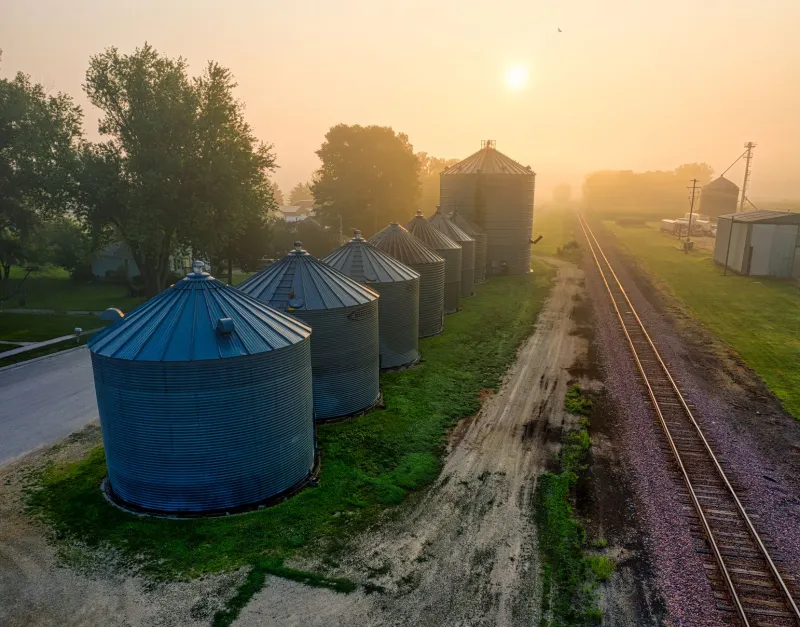
Drive through the flatlands of Kansas, Iowa, or the Dakotas long enough and you start to see them: massive cylindrical grain elevators rising out of the prairie like enormous blank canvases. A growing number of local arts organizations and individual artists have figured out exactly what that means.
The Quinter, Kansas mural project — championed largely by a handful of local volunteers and a regional arts nonprofit — transformed a cluster of grain silos into a sweeping tribute to the agricultural history of the High Plains. The artist behind the largest panel, a Dodge City-born muralist who goes by Terrabelle, spent three weeks on scaffolding in 40 mph winds to finish a piece that stretches nearly 80 feet across. "Nobody was going to come out here and do it for us," she said in a local newspaper interview. "So we did it ourselves."
That DIY ethos is basically the operating system of the rural mural scene. There are no corporate sponsors, no art-world validators, no influencer campaigns. There's a community that wants to see itself reflected somewhere, and there's an artist willing to climb up there and make it happen.
Southern Alleyways and the Art of the Overlooked
The South has always had a complicated relationship with public memory — which makes it one of the most charged environments for public art in the country. In mid-sized cities like Macon, Georgia; Hattiesburg, Mississippi; and Florence, South Carolina, a new generation of muralists is using walls and alleyways to tell stories that monuments and museums have historically ignored.
In Macon, a stretch of alley behind a row of downtown shops has become an unofficial gallery of Black Southern experience, anchored by a stunning piece from local artist D'Shawn Merritt depicting three generations of a fictional Georgia family against a backdrop of kudzu, red clay, and jazz-era typography. The city didn't commission it. A local business owner did, after seeing Merritt's smaller work around town and handing him a budget of under $2,000. The mural now draws visitors from three counties over.
"The gallery world isn't coming to Macon," Merritt told us over the phone. "But that doesn't mean Macon doesn't deserve great art. It means we make it ourselves and we put it somewhere everyone can see it for free."
This is the part that mainstream art criticism consistently misses: public muralism in overlooked communities isn't a consolation prize for artists who couldn't break into the gallery circuit. For many of these creators, the wall is the point. The scale, the accessibility, the fact that a grandmother walking to the bus stop gets to experience it — that's the whole aesthetic.
The Road Trip as Critical Practice
There's a growing subculture of people who treat mural-hunting road trips as a legitimate form of cultural criticism. Think of it as slow art tourism — the opposite of flying into Art Basel and speed-walking through booths. You drive. You stop in places that weren't on your itinerary. You talk to people.
Apps like Street Art Cities have helped catalog some of this work, but the best stuff often isn't documented anywhere online. It's the piece on the side of a hardware store in Clarksdale, Mississippi that a local high schooler painted as a senior project three years ago and that the owner just... never painted over, because it was too good. It's the barn in the Shenandoah Valley covered in geometric patterns by a retired schoolteacher who started painting at 60. It's the underpass in Pueblo, Colorado where a rotating cast of local artists has maintained an unofficial mural rotation for over a decade.
Finding these works requires a different kind of attention than scrolling a curated feed. It requires slowing down, asking locals, wandering a little. Which, honestly, is exactly the kind of engagement that art is supposed to produce.
Who Gets to Define "Important" Art?
Here's the uncomfortable question underneath all of this: why do we default to coastal cities and institutional validation when we talk about what matters in American art? The mural on a silo in Quinter, Kansas reaches more people in a year — actual human beings who encounter it in their daily lives — than most gallery shows in Chelsea ever will. So what exactly makes the gallery show more culturally significant?
The answer, of course, is money and access and the self-reinforcing machinery of the art market. Which is exactly why the mural scene thriving in America's overlooked corners feels like resistance. Not loud, manifesto-style resistance — but the quiet, persistent kind that just keeps painting, keeps showing up, keeps insisting that beauty and meaning belong everywhere.
How to Start Your Own Underground Atlas
If we've convinced you to point your car somewhere unexpected, here's a loose framework for finding the good stuff:
- Talk to locals first. The person at the diner or the independent bookstore almost always knows where the interesting art is.
- Look beyond the obvious. Train underpasses, the backs of buildings, the sides of small businesses on secondary streets — that's where the real work tends to live.
- Follow regional arts nonprofits on social media. Organizations like state arts councils and community development groups often document mural projects that never make national press.
- Go slow. The whole point is to notice things. You can't do that at 75 mph.
The underground atlas of American muralism is enormous, constantly expanding, and almost entirely ignored by the taste-making apparatus of the mainstream art world. That's not a bug. That's the feature. Get out there and find it.