Static Is the New Black: How a Generation of Artists Turned Digital Failure Into a Movement
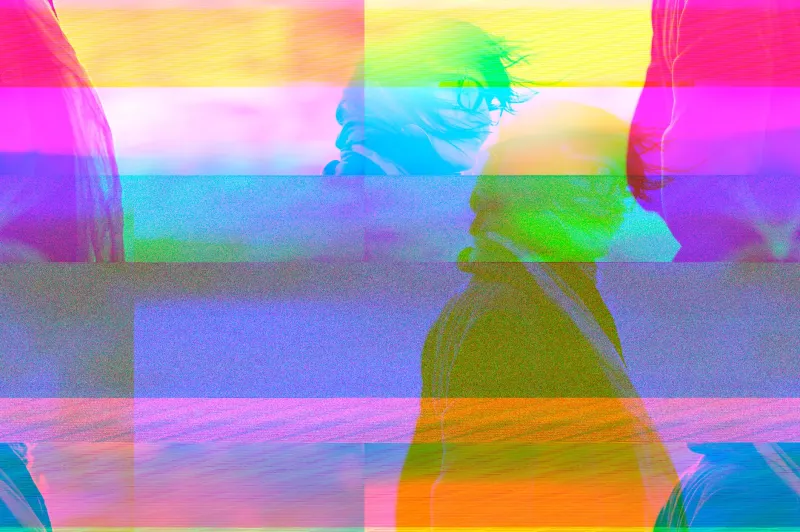
There's a particular kind of beauty in a broken thing. Ask anyone who's ever watched a scratched DVD spiral into pixelated chaos, or stumbled on a corrupted image file that looked more like a fever dream than a photograph. That accidental magic—raw, unfiltered, unintended—is exactly what a growing community of digital artists has decided to chase on purpose.
Glitch art isn't exactly new. But what's happening with it right now? That's a whole different story.
From Happy Accident to Intentional Practice
The roots of glitch aesthetics stretch back decades, to early video artists like Nam June Paik who physically manipulated television signals in the 1960s and '70s. Later, the demoscene—a tight-knit community of coders who pushed hardware to its absolute limits—gave rise to an appreciation for what machines did when they were stressed beyond their design. Errors became performances.
But the contemporary glitch art scene feels less like a technical exercise and more like an act of protest. Artists aren't just curious about what happens when software breaks. They're angry about what happens when it doesn't.
The context matters here. We're living inside an era of algorithmic image-making—where beauty filters are baked into every social platform, AI upscalers smooth out imperfection before your eye even registers it, and the visual landscape of the internet has become almost aggressively polished. Against that backdrop, a deliberately corrupted JPEG isn't just an aesthetic choice. It's a statement.
The Tools of Controlled Chaos
So how do glitch artists actually work? The methods vary wildly, and that range is part of what makes the movement so hard to pin down.
Some practitioners use databending—opening image or video files in software they were never meant for, like editing a JPEG in a text editor and introducing random characters into the raw data. The result is unpredictable and unrepeatable. Others manipulate compression artifacts directly, exploiting the way formats like JPEG discard visual information to create smeared, blocky distortions that feel almost painterly.
There are artists working in hardware glitch, using circuit bending techniques on old cameras, VHS decks, and game consoles to produce visual output that no software could ever simulate. And then there's a newer wave of creators using custom scripts and processing code to automate chaos—generating glitch aesthetics at scale, feeding corrupted inputs into machine learning systems and letting the AI hallucinate something entirely new.
What's interesting is that despite the technological sophistication involved, a lot of glitch artists describe their process in deeply analog terms. Words like texture, feel, and accident come up constantly. The technology is the medium, but the sensibility is almost painterly.
Gen Z's Visual Middle Finger
If there's one demographic driving the current explosion of glitch culture, it's Gen Z—and their embrace of digital malfunction makes a certain kind of cultural sense.
This is a generation that grew up entirely inside the algorithmic feed. They didn't watch social media get worse. They were born into it already optimized, already gamified, already surveilling their preferences and serving back a curated reflection of acceptable reality. The pressure to present a flawless digital self is something they've navigated since childhood.
Glitch aesthetics, then, function as a kind of visual exhale. Distorted selfies, corrupted animations, fractured type—these aren't failures of craft. They're refusals of a particular kind of perfection that has come to feel suffocating.
Creators on platforms like TikTok and Instagram have found that glitched content actually cuts through the noise. In an ocean of hyper-produced visuals, something that looks broken registers as authentic—even when it's been meticulously constructed to appear that way. That tension between genuine chaos and performed imperfection is one of the more fascinating paradoxes the movement keeps bumping into.
Beyond the Screen: Glitch Moves Into Physical Space
One of the most exciting developments in the scene right now is the migration of glitch aesthetics off the screen and into physical installation work.
Artists are printing corrupted imagery on fabric, ceramic, and metal—letting compression artifacts become texture in a literal, tactile sense. Gallery installations are using projection mapping to cover architectural surfaces in shifting, malfunctioning visuals that respond to sound or movement. Some creators are deliberately introducing errors into analog photography processes—cross-processing, light leaking, chemical manipulation—to achieve effects that rhyme with digital glitch without ever touching a computer.
There's also a growing intersection with fashion and streetwear. Labels and independent designers in cities like LA and New York are incorporating glitch-derived graphics into apparel, and the aesthetic has made its way into sneaker collabs, album artwork, and brand identity design for companies that want to signal a kind of anti-corporate edge. Whether or not that commercialization dilutes the original countercultural charge is a debate that's very much alive in the community.
The Politics of Imperfection
At its core, glitch art is making an argument about what visual culture values and what it suppresses. Perfection, in the digital age, is often a product of enormous invisible labor—the retouchers, the filter developers, the platform engineers who design systems to surface the most frictionless content. Glitch work makes that labor visible by refusing it.
There's also something worth noting about who gets to be imperfect in mainstream visual culture and who doesn't. The pressure to appear flawless online falls harder on women, on people of color, on anyone whose body or face doesn't map neatly onto dominant beauty standards. Some artists working in glitch aesthetics are explicitly engaging with that dimension—using distortion and fragmentation to interrogate how digital systems encode and enforce those standards.
It's not all heavy theory, though. A lot of glitch art is just genuinely, viscerally fun. There's a playfulness to the work that serious art discourse sometimes struggles to accommodate—a delight in breaking things, in seeing what a machine does when you push it somewhere it wasn't supposed to go.
What Comes Next
The challenge for any countercultural aesthetic movement is surviving its own success. As glitch visuals get absorbed into advertising, mainstream design, and big-platform content, the original charge can dissipate. The movement has been here before—early glitch artists watched their work get flattened into a trendy filter and kept going anyway, finding new techniques and sharper edges.
Right now, the most interesting work is happening at the intersections: glitch and AI, glitch and installation, glitch and fashion, glitch and political art-making. The artists pushing into those spaces seem less interested in preserving a style than in asking a persistent question—what does it mean to make something real in a world that keeps trying to smooth everything out?
The answer, apparently, involves a lot of deliberate destruction. And honestly? It looks incredible.