Corrupt by Design: Inside the Underground World of Artists Who Break Video on Purpose
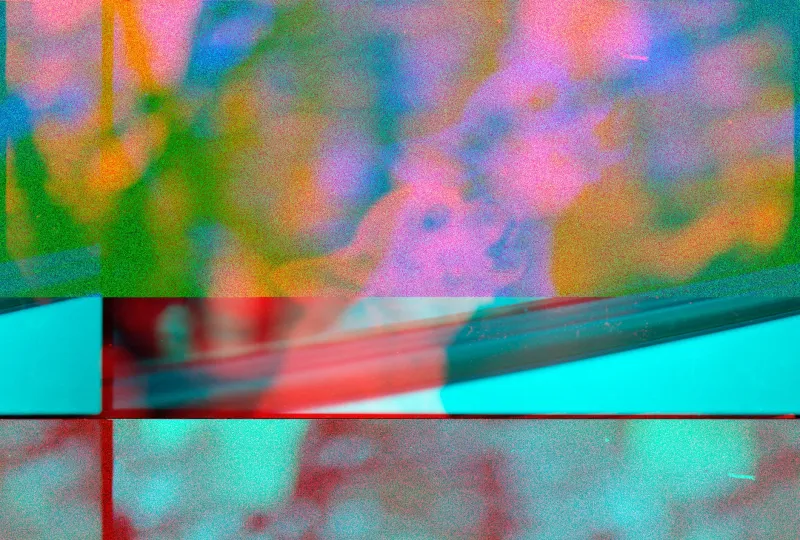
There's a moment, if you've ever watched a heavily compressed video buffer on a bad connection, where the image falls apart in a way that's almost beautiful. Faces smear across backgrounds. Colors bleed into shapes that don't belong to any object. The frame becomes a painting nobody planned. Most people click away. A growing community of artists hits record.
They call themselves datamoshers, codec hackers, glitch artists — the names shift depending on who you ask and how precious they feel about labels. What unites them is a shared obsession: exploiting the technical machinery hidden inside every digital video file to produce abstract visual work that couldn't exist any other way.
What Even Is Datamoshing?
To understand what these artists are doing, you need a quick, painless detour into how video compression actually works. When your phone records a video, it doesn't store every single frame as a complete image. That would eat storage alive. Instead, compression formats like H.264 and MPEG-4 use two types of frames: I-frames, which contain full image data, and P-frames, which only record what changed from the previous frame. It's an elegant, invisible system — until someone starts deleting I-frames on purpose.
Strip out those anchor frames and the video loses its reference points. Motion data from one scene bleeds into the visual content of the next. A person walking through a door might leave ghost trails across a landscape that was never in the same shot. Bodies dissolve into color fields. The codec, confused and doing its best, generates imagery that no camera ever captured.
That's datamoshing in its most basic form. But artists working in this space have pushed far beyond the simple I-frame trick.
From YouTube Artifact to Gallery Wall
The technique first surfaced in internet culture around 2007 and 2008, with music videos for artists like Chairlift and Kanye West bringing it into mainstream visibility. For a while it was a trend — a cool visual effect that signaled a certain kind of digital-native aesthetic. Then it faded, the way internet trends do.
What's happening now is different. A cohort of artists, many of them in their late twenties and thirties, have taken the underlying ideas and pushed them into territory that feels genuinely fine-art adjacent. Galleries in Brooklyn, Los Angeles, and Chicago have started showing single-channel video works built entirely from manipulated compression artifacts. Some pieces sell as limited-edition digital files with verified provenance. Others are presented as large-format projections where the scale transforms what might look like a glitchy YouTube clip into something immersive and almost overwhelming.
New York-based artist Mara Voss — who goes by the handle LOSSLESS, which is a deliberate irony — has been showing datamosh work since 2019. Her piece Inherited Motion layers footage of her grandmother's home videos with contemporary street footage, then systematically removes I-frames at specific intervals. The result is an image where a 1970s kitchen bleeds into a 2022 Brooklyn intersection, the motion data of one era grafted onto the visual content of another. "I'm interested in how compression is basically a form of forgetting," she said in a 2023 interview. "The codec decides what's important enough to remember. I'm just making that decision visible."
The Tools Are Weird and the Community Is Weirder
The technical pipeline for this kind of work is not exactly plug-and-play. Artists use a combination of open-source video editors, hex editors that let them manipulate raw file data, command-line tools like FFmpeg, and sometimes custom scripts written specifically to introduce controlled corruption. There's a dedicated Discord community — several, actually — where members share techniques, troubleshoot codec behavior, and post work-in-progress clips that look like fever dreams rendered in standard definition.
What's striking about these spaces is the rigor. This isn't random destruction. Artists spend hours understanding why a particular codec behaves a certain way, what happens when you change specific bytes in a file header, how different compression rates affect the visual character of the artifacts produced. It's closer to printmaking — where understanding the physical behavior of acid on metal determines what the final image looks like — than it is to the pop idea of "glitch art" as accidental cool.
Some practitioners have developed what they call "codec signatures" — recognizable visual textures produced by working with specific formats or specific types of source material. Working with H.265 produces different artifacts than H.264. Footage shot in low light corrupts differently than footage shot in bright sun. These distinctions matter to the artists the way grain structure matters to a film photographer.
Why Galleries Are Paying Attention Now
Part of what's changed is the conversation around digital art more broadly. The NFT boom, for all its chaos, forced a lot of institutions to think seriously about how digital work gets collected, valued, and preserved. That opened doors for video-based practices that had previously existed in a weird limbo between fine art and internet culture.
But there's also something happening at a more conceptual level. In a moment when AI image generators can produce technically flawless imagery on demand, work that's rooted in specific technical constraints and material understanding starts to feel meaningful in a different way. The artifacts in a datamoshed video are evidence of process. You can't fake them convincingly without understanding the underlying system. That's a form of craft, even if the material is pure information.
Collectors who've started acquiring this work describe it in terms that sound almost classical — they talk about the hand of the artist, the specificity of the imagery, the way no two corrupted files produce identical results. Which is a funny thing to say about work made by deleting data from video files. But maybe that's exactly the point.
The Preservation Problem Nobody Wants to Talk About
There's a thorny issue lurking beneath all of this, and the artists working in this space are mostly aware of it: digital preservation is hard, and work that depends on specific codec behavior is particularly fragile. As video formats evolve and software updates change how files are rendered, there's a real risk that datamoshed work will look different — or simply fail to render — on future systems.
Some artists are leaning into this as part of the work's meaning. Others are partnering with digital preservation organizations to document not just the files but the specific software environments needed to display them correctly. It's an unsolved problem, and it gives the work an additional layer of fragility that feels either poetic or alarming depending on your perspective.
What's clear is that this community isn't going anywhere. If anything, as the tools become more accessible and the conceptual framework more developed, the work is getting more ambitious. Somewhere right now, someone is deleting I-frames and discovering something that looks like nothing a camera ever caught — and figuring out how to show it to the rest of us.